ServicesReverse Osmosis
Reverse Osmosis Systems in West Carson
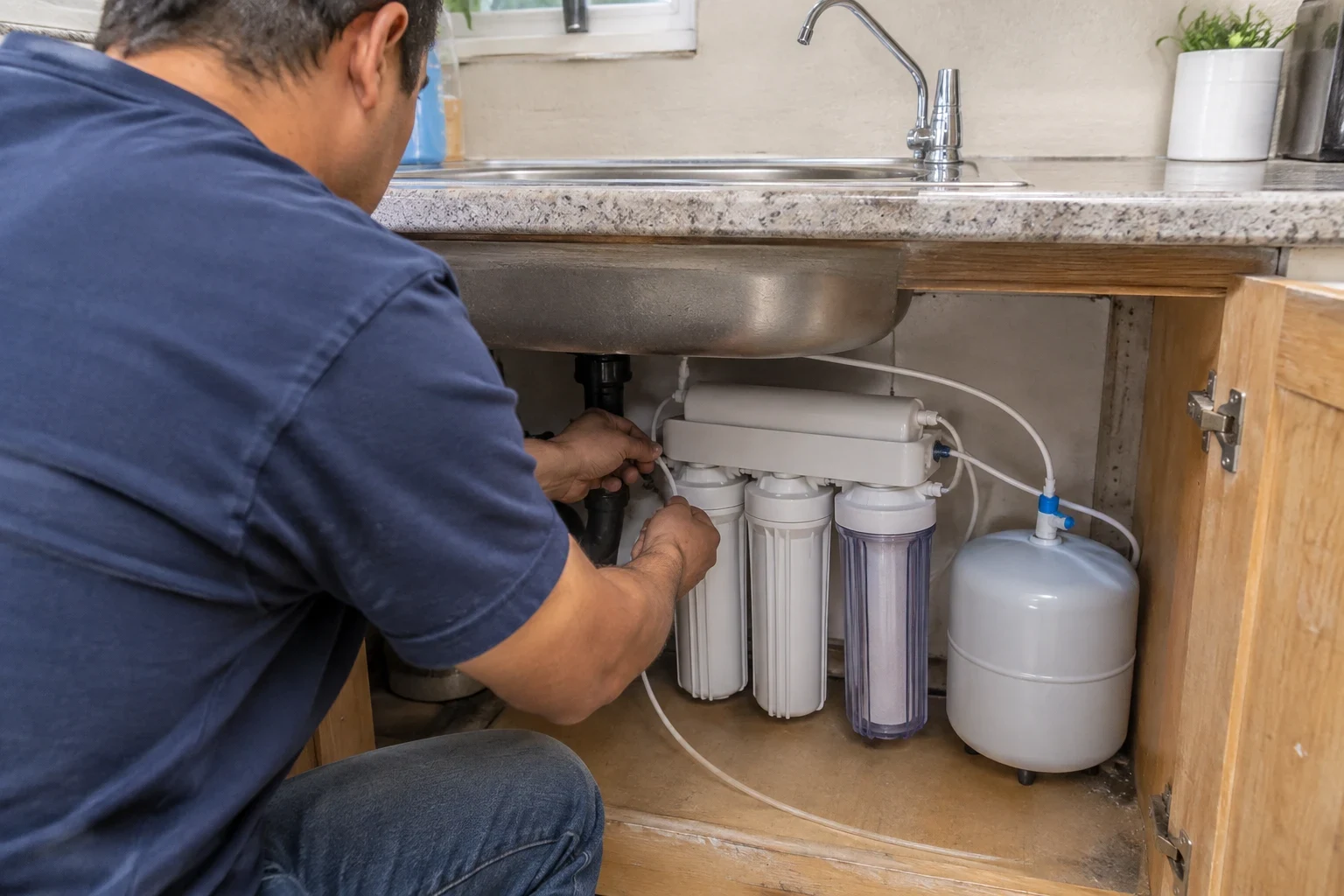
We fit an under-sink reverse osmosis unit that feeds a dedicated faucet for drinking and cooking. The membrane handles filtration. Whether the system lasts for years or leaks into your cabinet comes down to the drain saddle, every fitting and the tank's air pressure, so that is where we focus.
What reverse osmosis does, and when it fits
Inside an RO unit, your household line pressure pushes water through a thin-film membrane. Water molecules pass, while dissolved salts, lead and many other metals, and a wide range of trace contaminants are held back and rinsed away to the drain. Two stages protect that membrane: a sediment cartridge that catches grit, then a carbon block that removes chlorine, which would otherwise break the membrane down. After the storage tank, a carbon polishing cartridge cleans up the taste right before the faucet.
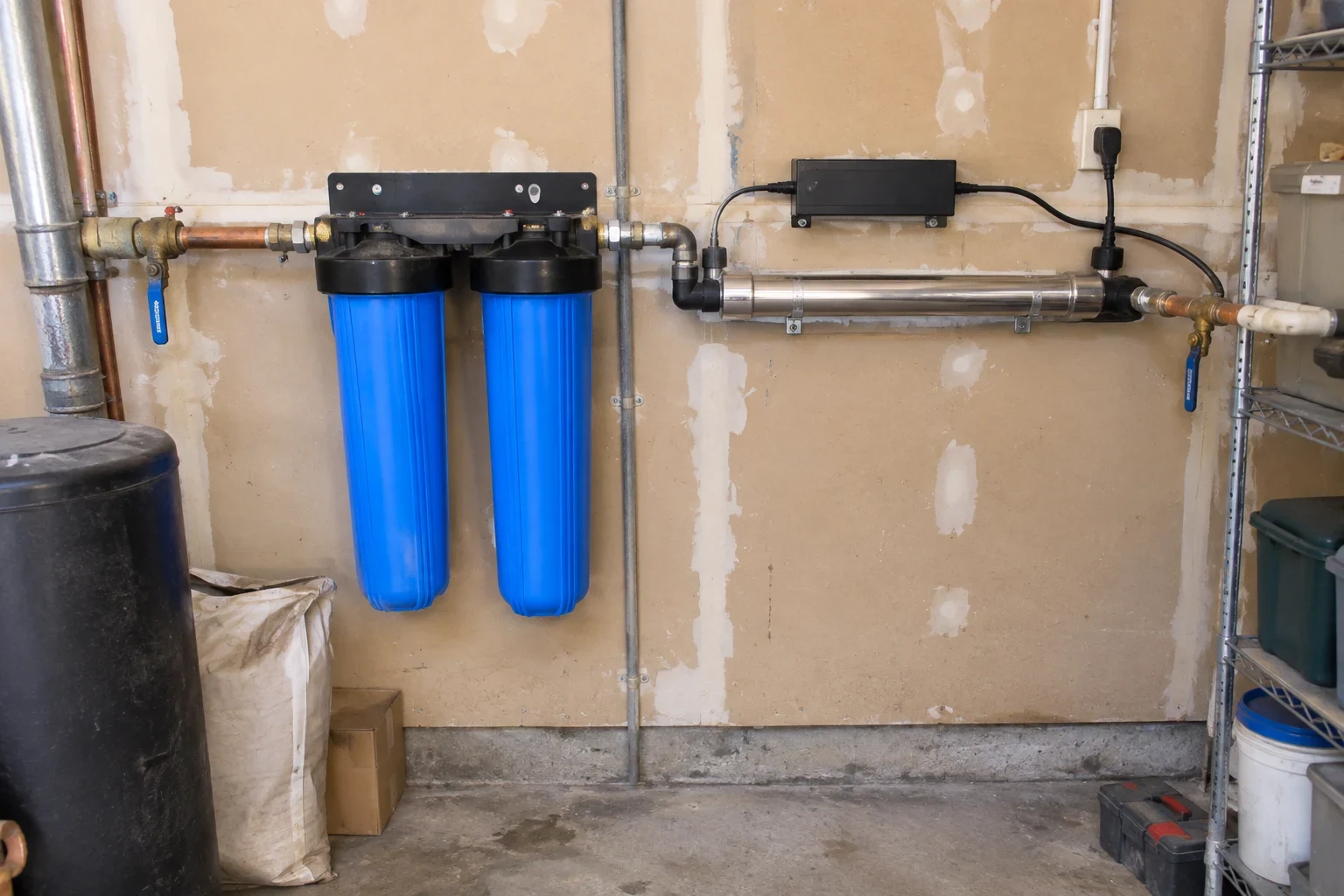
Choose RO if what bothers you is drinking and cooking water: a flat or chemical taste, aging pipes, cloudy ice cubes, or stacks of bottled water in the garage. It serves a single tap, plus a refrigerator line if you want one, rather than every fixture in your home. When the issue follows you to the shower and washing machine, see our City Water Filtration page for a point-of-entry option.
In West Carson kitchens, most RO trouble we're called about isn't the membrane at all. It's a drain saddle mounted too low, a fitting that never fully seated, or a tank holding the wrong air charge. Those are the details we spend our time on.
What goes into a careful RO install
- 01
Membrane sized to your household
We choose the membrane capacity based on how much your family drinks and cooks with, so the tank keeps up during dinner prep. Sediment and carbon stages sit in front of it as protection.
- 02
Drain saddle above the P-trap
The brine line ties into the vertical tailpiece above the trap. Mounted lower, wastewater can creep back toward the membrane, and you hear a gurgle every flush cycle.
- 03
Faucet hole done right
An unused sprayer or soap opening on your sink is our first choice for the faucet. Without one, we bore through granite, quartz or porcelain using a matched bit at low speed to prevent chipping. Where your drain setup needs it, we fit an air-gap faucet.
- 04
Tank precharge measured
With the tank empty, we read its air pressure and correct it. Tanks often arrive under-charged, which means weaker flow and less water you can actually use.
- 05
Tidy, serviceable tubing
Each tube is cut square and seated all the way into its fitting. Lines are routed so filter changes never require pulling connections, and the unit is mounted to leave room for your trash can.
Questions about Reverse Osmosis?
Call(310) 943-1092Signs a reverse osmosis system makes sense
Your drinking water tastes of chlorine
Disinfectant taste is common in city water. The carbon stages remove it, and the membrane takes care of much of what carbon alone leaves behind.
You buy water by the case
If bottled water is a weekly errand, an RO tap usually replaces it, along with the plastic and the carrying.
Questions about older pipes
Lead and other metals can come from household plumbing rather than the supply. RO is one of the few under-sink methods that reduces them reliably.
White spots and kettle scale
Dissolved minerals leave film on glasses and crust in kettles and coffee makers. Water from the RO tap carries far less of them.
An existing system that drips or runs nonstop
A drain line that trickles all day usually means a failed automatic shutoff valve or a tank that has lost its charge. We can repair or replace the unit.
Your install, step by step
- 1
We start on the phone
You tell us about your sink, the countertop material, the space under the cabinet, any fridge line you'd like and what you dislike about your water. With that, we know which unit and parts to load.
- 2
Valves and pressure checked
We confirm your shutoff valves close all the way, then put a gauge on the cold supply. When the reading falls below roughly 40 psi, production drops and a larger share of the feed gets flushed away, so we'd talk through adding a permeate pump before going further.
- 3
Mounting and connections
The feed valve, drain saddle and faucet go in, the unit is mounted, and tubing is run with every joint seated and inspected. Any refrigerator or ice maker line gets connected at this stage.
- 4
Flush, leak test and handoff
We rinse the new membrane and carbon, then wipe each fitting with a dry paper towel to spot even a slight weep. Last, we show you how the cartridges come out and the schedule for replacing them.
What moves the price of an RO system
The system itself is most of the cost, and the rest depends on your kitchen. We offer free install (we cover the cost), so the price you hear on the phone covers the equipment and any added parts your setup needs. Here is what changes it.
- System type and stages
- A standard five-stage unit costs less than one with a remineralization stage, a permeate pump or a tankless design.
- Countertop and faucet hole
- Using an existing hole is simplest. Stone or porcelain needs a dedicated bit and more care.
- Fridge or ice maker line
- A long run to a refrigerator across the kitchen takes more tubing and fittings than one next to the sink.
- Low water pressure
- If your home's pressure is low, a permeate pump or booster adds to the parts list but improves output and cuts waste.
- Ongoing filter changes
- Pre-filters and the polishing filter are replaced regularly, and the membrane less often. We explain the schedule before you decide.
Reverse osmosis questions we hear
How much water goes down the drain with RO?
A typical unit sends several gallons down the drain for each gallon you drink. That flush keeps the membrane from clogging up. Low feed pressure pushes the ratio higher. A permeate pump trims the waste considerably and fills the tank more quickly.
When do the filters get changed?
Expect to swap the sediment and carbon pre-filters every six to twelve months, based on how much water you use. The membrane lasts longer, usually two to three years. Keeping up with the pre-filters matters most, since chlorine getting past a used-up carbon block shortens the membrane's life.
Will RO strip minerals from my water?
It does. Along with what you want removed, the membrane also holds back calcium and magnesium. In a normal diet, food supplies most of those minerals and tap water only a small part. If you like water with a mineral taste, a remineralization cartridge after the tank adds some back.
Why does the RO faucet pour slower than my regular faucet?
The RO faucet draws from a small pressurized storage tank rather than directly off your main line, so the stream is softer and steady. When it drops to a trickle, the usual culprit is a tank that has lost its air charge or pre-filters that are clogged, and we look at both.
Will my counter need a new hole?
Usually not. The RO faucet tends to fit a spare sprayer or soap dispenser hole in the sink. If a new hole is needed, we drill it slowly with a bit designed for stone or porcelain to keep the edge clean.
Better drinking water from your kitchen tap
Describe your sink, your cabinet and what you want your drinking water to be like. We will suggest a system and walk you through the install.