ServicesWell Water Filtration
Well Water Filtration in West Carson
Well water carries what the ground gives it: sand, rust-colored iron, sometimes a sulfur smell. We install filtration sized to your pump's actual flow, with a bypass, unions and a proper drain line, so the system keeps working long after the first filter change.
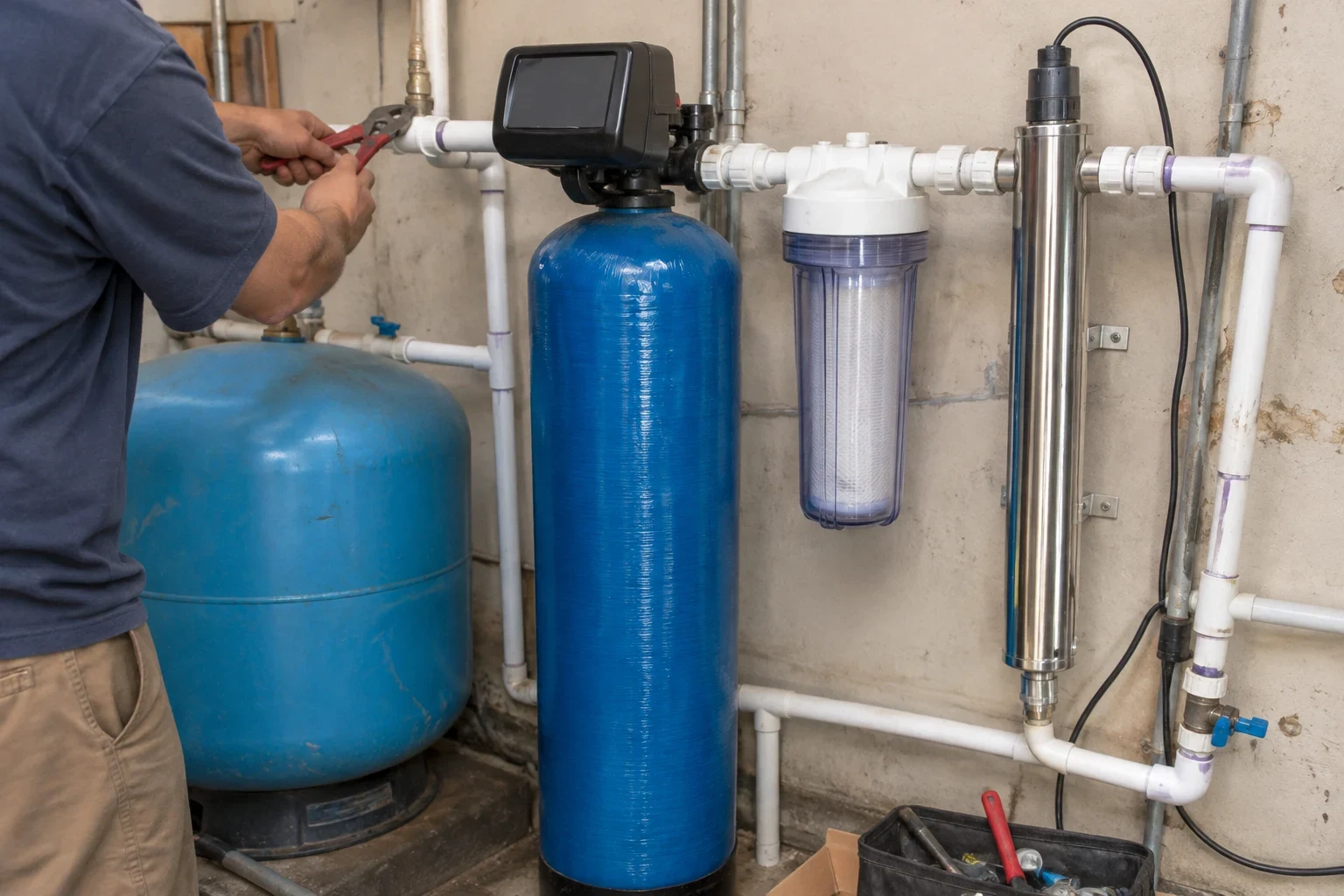
Filtration Built Around How Your Well Actually Runs
Nobody cleans well water upstream of your faucet. Whatever the aquifer, casing, pump and pressure tank hand over is what you drink and bathe in. The usual complaints are grit from a worn well screen, dissolved iron that leaves orange rings in the toilet bowl and hydrogen sulfide with its rotten-egg smell. Each one needs its own filter stage, and the wrong media in the line only pushes the problem further downstream.
Most well filters that quit early were not let down by the filter itself. They were sized for a flow the pump never delivers, installed with no bypass, or given a backwash line stuffed directly into a drain without an air gap. Those details are where we put our effort, because they decide whether the system still works years from now.
If your main goal is cleaner drinking water at the kitchen sink, we often pair well filtration with an under-sink reverse osmosis unit. We will explain on the phone how the two work together in your home.
What a Well Filtration Install Includes
Sediment prefilter at the right micron
We start with a spin-down or cartridge sediment stage ahead of everything else. Catching sand and scale here protects the media tanks and fixture valves downstream. We choose the micron rating to match what your well sheds, because a filter that is too fine clogs in weeks.
Media tanks matched to the problem
Iron, manganese and sulfur odor each respond to specific media, such as catalytic carbon or an oxidizing bed. We size the tank to your pump's gallons per minute so water stays in the media long enough to actually be filtered.
Bypass valve and unions
Every system gets a three-valve bypass and threaded unions. Water keeps flowing to the house during a filter change, and whoever services it next can pull a tank without cutting pipe.
Pressure gauges on both sides
A gauge before and after the filters shows the pressure drop at a glance. When the gap widens, the cartridge is loaded, so you replace it on evidence instead of guessing by the calendar.
Drain line with a code air gap
Backwashing tanks send rinse water to a drain. We terminate that line above a code-compliant air gap, which keeps dirty rinse water from being drawn back into the pipes that feed your home.
Flush and startup
After install we flush the media, check every joint for leaks under full pressure, and walk you through the bypass and the filter change.
What Your Fixtures Tell You About Your Well
Reddish stains on tubs and toilets
Rusty brown rings in toilets, tubs and the dishwasher typically mean dissolved iron. You cannot see iron until air oxidizes it, so tap water in a glass may look clean while the stains keep spreading.
Faucets that smell like rotten eggs
That smell usually comes from hydrogen sulfide gas. If the hot tap smells worse, the magnesium anode rod inside your water heater may be reacting with the water and producing more of it.
Sand in the aerators
Grains of sand caught in aerator screens show that sediment from the well is reaching the house. Left alone, it scores valve seats and wears down toilet fill valves.
Showers losing force
A cartridge that is too small or clogged with sediment chokes flow. Shower pressure fades and the pump cycles on and off more. This cause is common and easy to fix.
Dark specks or slime in the tank
Black flecks generally point to manganese, while a slimy coating inside the toilet tank can signal iron bacteria. Each calls for a filter stage chosen for that specific cause.
How the Job Runs From Call to Startup
- 1
Talk it over by phone
Describe what you see, smell or find in your faucet aerators, plus what you know about the well and its pump. Keep any lab report on your water nearby if you have one. All of that helps us choose the filter stages.
- 2
On-site look and plan
At the house we check the piping at the wellhead, the pressure tank, the room available and the route for a drain line. We measure the flow so the system matches your pump, then go over the plan and parts with you before starting.
- 3
Putting it in
With the pump off and the floor covered, we set the system level on a firm base. The filters are placed after the pressure tank along with the bypass, unions and gauges, and each joint is tightened to spec, not by guesswork.
- 4
Flush, testing and handoff
We pressurize the system gradually to clear out air, flush the media and inspect each connection at full pressure. You learn how to read the gauges and work the bypass before we go.
What Sets the Price of Well Filtration
The price follows what is in your water and how your well equipment is arranged. One sediment stage is a very different job from several tanks for iron and odor. Before you decide, we go over every part and the reason it is needed. Our offer includes free install (we cover the cost).
- How many filter stages
- A sediment stage on its own is the simplest setup. Each stage added for iron, manganese or sulfur smell brings more media tanks and control valves.
- Flow from your pump
- A pump that moves more gallons per minute calls for bigger tanks, so the water spends enough time in contact with the media.
- Layout and reach
- Cramped spaces, long distances from the wellhead or no drain nearby for backwash water all add pipe and fittings.
- State of the plumbing you have
- Rusted galvanized fittings or a worn pressure tank valve close to the tie-in may need to be replaced so the new filters do not hang on a weak spot.
Well Water Filtration Questions
Something not covered here? (310) 943-1092
Where does the filter go in a well system?
After the pressure tank, before the water reaches the house plumbing and water heater. Mounting it there keeps the pump and tank pressure steady while protecting everything downstream. We add a bypass so you can isolate the filters without shutting off the house.
Will a filter lower my water pressure?
Any filter adds some resistance, but a correctly sized system keeps the drop small. Trouble usually comes from undersized housings or cartridges left in far too long. The gauges we install show you when the pressure loss means a change is due.
What sets the replacement schedule for the cartridges?
Mostly the amount of sand and iron your well sends up. A sandy well can load a sediment cartridge in a few months, while a clean one may go much longer. Media tanks that backwash on their own run far longer between service, and we show you which signs to watch on your particular setup.
Can this fix a sulfur smell?
In many cases, yes, with the right media stage. If the smell appears only when you run hot water, the water heater's anode rod may be the cause rather than the well, and we will say so plainly instead of selling a filter for it.
Do I still need a reverse osmosis system for drinking water?
Not always. Well filtration handles sediment, staining and odor for the whole supply. Reverse osmosis at the kitchen sink adds a finer barrier for drinking and cooking water, and many well owners choose both.
Get Your Well Filtration Plan Started
Tell us what is showing up in your water and how your well is set up. We will explain which filter stages make sense and how we would plumb them in your home.